Showing posts with label Other. Show all posts

Tuesday, January 3, 2017

A NEW YEAR - NEW WILLOW EXPERIENCES TO EXPLORE

No New Year resolutions, but of course lots of plans!

During 2016 my "new" studio proved to be perfect for workshops taught by me and classes with visiting willow teachers as well as a wonderful home for my own willow creativity.
The PLAN is to give it a "face-lift" this year - as in new eyes and some make up - but it will still in the meantime be perfect for our use.


Keeping you all informed about what is happening at Lakeshore Willows IS a priority, but sometimes "life happens" and planned time for newsletter, blog, website and facebook slips away.
The PLAN is to connect in a more efficient and frequent way at all those venues to share with you exciting planned workshops and other activities.
Selected pics from Hjornholm November 2016 classes

In 2016 I was very happy to have the opportunity to get to know some very talented basket makers whom I had only heard about until then.


One of Canada's "Grand Old Ladies" of willow!
Many people who attended workshops here would tell me that they made one or a few willow baskets many years ago - with Ankaret Dean.
She is an amazing person, still very much involved in her community in McDonald's Corners, Ontario where she had invited me to teach 3 days of classes this summer.
Staying at her home I had the opportunity to learn about some of all the activities she has initiated and/or been involved in and I am looking forward to next time.


One of the people who actually made her first basket with Ankaret Dean, Joan is a fantastic artist/basket maker living in BC.
I knew about Joan from my friend, Danish willow artist and basket maker Eva Seidenfaden who have visited Joan in BC many times to teach classes. So when the basketry guild that I am a member of, Southwestern Ontario Basketry Guild, planned a willow retreat with Joan teaching one of the classes, I was excited to be able to participate.
A wonderful person and inspirational artist I really look forward to meeting again. AND she taught me my first basket weaving with other natural materials incl cedar bark.


Irish basket maker known by everybody who loves willow.
Joe was high up on my wish list of teachers to learn from and I was lucky to spend 6 days of willow weaving with him at the Willow Gathering in Decorah, Iowa last summer.
A fantastic week learning from one of the best.

And a few more pics from workshops here during 2016:

     
So now 2017 has arrived and I wish for all that it will be a healthy, happy year filled with positive energy.

Words and photos by Lene Rasmussen,Willows.

Thursday, September 10, 2015

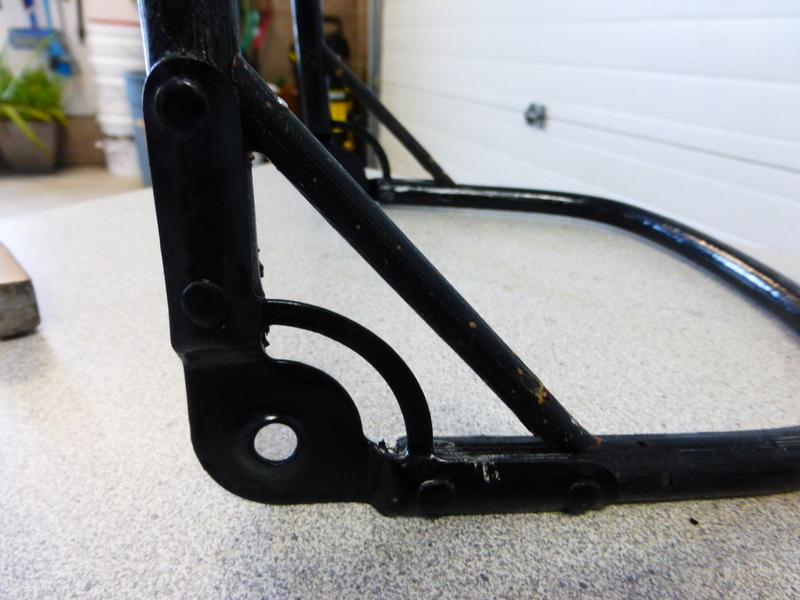
Repairing an antique doll's carriage


A basketry guild that I am a member of forwarded a mail to all members from the owner of an antique doll's carriage.
She was looking for someone to help repair the buggy as her 3 year old daughter unsuccessfully had tried to enter it and thus put her foot through it a couple of places.

I wasn't sure that I would be able to do the job, but was willing to take a look at it and responded to the mail. It turned out that the owner lived just about 30 minutes drive from here and she came to see me with the buggy.
My first impression was that it was made using flat reed. As I only do work with natural willow I showed the owner examples of baskets the weave of which would be similar on the buggy if I did the job, and she was excited to have me try to not fix or repair, but replace the weave.
So after a few days I contacted her with a quote as I had decided what/how to do.
The original cover had been cut to fit from a woven sheet and attached to the frame with multiple nails. Then another strip was attached to cover the nails and ends of the weave - using nails. As can be seen on the first of these images, the weave had been painted at least 3 times: pink, blue and the last cote white.
Removing the original cover was a much bigger job than I had anticipated, but I got it off. Interestingly enough it turned out that the material used for the weave was PAPER. Fairly heavy paper folded twice and the stakes were paper that was rolled so that it resembled round reed.
The owner had chosen Salix x 'Americana' for the weave and we decided to paint the frame black which would suit the darker green colour of the willow.
For the basket part of the buggy I drilled holes under the bottom of the frame for my stakes.


Turning the stakes out and around the frame and tying them made it possible for me to weave the sides of the buggy so that the "basket" fit snug around the frame all the way around. 

For further stability and a bit of interest I tied willow around the edge at a point on both sides.
Now to the canopy!
The owner had given me permission to make changes and the two "windows" in the canopy weren't going to be incorporated in the new design.
A square, cracked peg inserted to hold the top frame in place - and to which the original weave was nailed - was replaced with a piece of a willow rod that was naturally black.
To make it all come together I turned the weave around (in the original it appeared that the "stakes" would run from front to back) and wove the canopy as a "frame basket" starting in the middle of the inserted willow piece. 

And the final appearance.

Words and photos by Lene Rasmussen,Willows.

Monday, February 28, 2011

Garden Making with Lakeshore Willows

Coming home from "2 weeks in the sun on a beach in Puerto Plata" I couldn't wait to open my spring issue of Garden Making - which was waiting for me, delivered to subscribers the day after we left home.

I subscribed to Garden Making when it was first introduced at Canada Blooms and I have loved every issue.

This time my excitement was different as I knew that Lakeshore Willows is featured in the monthly pages: Gardener's Notebook and I had to find Garden Making in the pile of mail and open it at 2 a.m. just after we arrived home.

My friend Yvonne Cunnington - "Thank you so much for writing this, helping me spread the word about working with willow"

The spring issue went on sale today.


Text and photos by Lene Rasmussen,Willows.

Sunday, May 23, 2010

Blue Eyed Grass

Last year - while weeding one of my garden beds - I noticed this grass-like "weed" and decided to leave it there. I wasn't quite sure, but hoped it might be Blue Eyed Grass.

This spring it has increased in volume and for the past week or so it has been blooming. There are several species of this Ontario native, but I believe this is the Common Blue Eyed Grass (Sisyrinchium montanum). Each flower only lasts one day, but I have been lucky that this little plant (about 20 cm tall) has produced an abundance of blooms. It belongs to the Iris family and as such - on closer inspection - has the same type of flat, pressed together leaves and when it isn't blooming, it forms a neat little blueish-green tuft.
It hope it will like it here and multiply. 

Words and photos by Lene Rasmussen,Willows.

Tuesday, May 4, 2010

Eastern Milk Snake


A "snake person" I am not! But I have learned to accept their presence and understand that in many ways they are "a gardener's friend".
Most of the snakes I've seen here are Garter Snakes. You can see how we "rescued" one last winter here and here, but the first one I saw this year is this one. I have identified it as an Eastern Milk snake (but if anyone has any other suggestions, please tell me).

I didn't measure it, but my guess is that he was about 75 cm long and slender. He didn't move around much, probably because it was too cold still  - although the sun was out.

Wednesday, January 20, 2010

Winter's Beauty

One of my favourite blogs: Gardening Gone Wild has long tempted me with their monthly contest, Picture This Photo Contest. For January 2010 the theme is "Winter's Beauty" and the many photos submitted (go to the comments for their contest post) truly show that there is beauty to be found in winter. You may not like the cold, ice, snow, and dark, but admit that there is lots of beauty!
Being new to photography, I finally this month decided to participate, and here is my chosen photo:
Although the snow is not visible on the photo, it is covering the ground in a thick, soft layer and I believe it gives the photo it's special light and colours - helped by the red twigs on the dogwoods in a distance.

Sunday, November 1, 2009

European Beech - lasting colour

A week or so ago we finally had some real fall colour around here - and now after a couple of days with high winds almost all leaves have fallen.
Fagus sylvatica
This spring I planted one of my very favourite trees, Fagus sylvatica (European beech) and although it is quite small, I enjoy looking at it every day. The leaves slowly turn from green to yellow - with a purplish tint while they transform to a final golden brown. Unlike most other decideous trees, younger trees keep most of their beautiful brown leaves all winter - finally dropping them as the new leaves unfold in spring. As the trees mature, typically only some of the lower branches will keep their leaves during winter.
Fagus sylvatica at Sunset Villa Mindepark, Puslinch
At the Mindepark (Memorial Garden) at Sunset Villa Association, Puslinch, Ontario I captured this beautiful Fagus sylvatica (the tree is from Denmark, if I am not mistaken) today as we went for a walk around the park after having indulged in delicious Danish open faced sandwiches along with one of my very favourite Danish Beers, Tuborg, at the Sunset Villa Restaurant.
I am so looking forward to my little tree getting bigger.

Sunday, September 20, 2009

From seed to bloom first season - perennials

The new perennial bed is filling in with the plants that I grew from seeds this spring. It will take a couple of years until everything really has settled in and is able to block out most weeds, but I am quite happy (for now) - many of my plants have bloomed this first season:
The verbenas, poppies and daisies were the first to start blooming, already before they were transplanted to the garden.
The white poppy (papaver anomalum 'Album') is still blooming, but most of the plants are quite small and I hope that they will get stronger, larger by next summer.
Brazilian verbena (verbena bonariensis) has put up a non-stop show and I just love their colour and airy structure.
- and so do the Monarch butterflies.
Daisies have always been some of my favourite flowers - I would just wish that they had a much longer blooming time. I chose this double shasta daisy (leucanthemum maximum 'Crazy Daisy') and this first year their blooming season has been quite long, mostly because the individual plants decided to start blooming at different times.
This beautiful agastache (agastache foeniculum) also started it's purplish-blue flowers early in the summer - but ONE DAY AFTER we had this summer's heaviest rain they all died, drowned. My frantic digging of trenches didn't save these and a few more plants - darn!
Sitting right in the middle of the lowest spot and with their feet in water were the sneezeweed (helenium flexuosum) their happy little faces glowing. I'll ad some more heleniums next year to help fill in the bare spots in the bed.

Saved by the trench were the native Giant Blue Lobelia (lobelia siphilitica). A couple of them died, but most came back from their drooping state after I dug the trench.

Another native (you find it everywhere around the countryside this time of the year) the aster (aster puniceus) has bloomed and is now producing large amounts of seeds that will be spread by the wind.
Butterfly weed (asclepias tuberosa) bloomed although the plants are very, very tiny. After the butterfly larvaes have been there, there isn't much left - hopefully enough to carry the plants over till next year.
I didn't really expect any of the echinaceas to bloom this year, but the white variety Alba (echinacea purpurea 'Alba') has turned out a few blooms - although I have left them in small nursery pots to be transplanted to the garden soon. Looks like it was not just seeds from Alba in that envelope from the seed company.
With a little luck - and lots of work - I'll be able to post some beautiful images of the perennial bed next year.

Monday, June 8, 2009

Perennials from seed

The greenhouse is bursting with plants, some of them ripe for transplanting. Actually, some have been in their pots far too long so that by now they are pot bound and need to go in the garden very soon - or some of my hard work will be wasted. The Leucanthemum maximum 'Crazy Daisy' (Double shasta daisy) are rapidly filling in and they are thirsty constantly.
Verbena bonariensis (Brazilian verbena) are just as big and compact and screaming for more room.
I transplanted the first 10 of Aruncus dioius (Goatsbeard) last week-end as one of the beds that they are going in was cleaned up and mulched.
The native Aster puniceus (Purple stemmed aster) was almost "standing still" for some time, but the last couple of weeks really got them growing.
Digitalis stewardii (Foxglove) is the best looking of my three varieties. D. furreginea and D. parviflora didn't have a high germination % and are more or less just surviving. I think that I'll get a few of each, but this one is the best so far.
Agastache foeniculum (Giant blue hyssop) have done extremely well and also need to get a new home soon. Looks to me like a couple of seeds were from the golden-leaved variety?
Some species/varieties seem to be doing well, but stay small as this Heuchera villosa (Coral Bells),
Monarda fistulosa (Bee balm), and
Thalictrum pubescens (Tall meadow rue). I wonder if they would have looked different had I transplanted them into larger pots earlier, or are they just enjoying their youth as they don't have to rush to maturity like their annual cousins? I feel that they are too small to go into the garden and I will probably have to transplant them to either larger pots or a nursery bed until the fall or next spring.
In the green house, but not shown here are also Papaver anomalum 'Album' (White poppy), Euphorbia polychroma, Lobelia siphilitica (Great blue lobelia), Helenium flexuosum (Sneeze-weed), Sanguisorba officinalis (Great burnet), Liatris 'Floristan Violet' (Blazing Star), Asclepias incarnata (Swamp milkweed), Salvia superba dwarf 'Blue Queen', Salvia nemerosa, Phlomis tuberosa, Echincea purpurea 'Primadonna', E. purpurea 'Alba', and E. purpurea 'White Swan'.
It's all been fun and very exciting - although lots of work - to see the seedlings grow and flourish.
Winter-sowing however has been disappointing. Many varieties didn't germinate, some only had very few seeds germinate, and then some germinated and disappeared again before the seedlings grew big enough for transplanting.
Winter sowed Eryngium planum (Flat sea holly) had one seedling from a packet of seeds as did Sorghastrum nutans (Indiangrass).
Eupatorium maculatum and E. purpureum (Joe Pye) both germinated with 5-8 seedlings then died for me.
Angelica (Great Alexanders), Trollius europeanus (Globe flower), and a handfull of varieties from seeds I collected didn't germinate at all (yet?).
Sunflowers, Hollyhock, a double rudbeckia, echinacea, and shepherds scabiosa germinated well and are growing, although very tiny seedlings. Also germinating, but in small numbers were Astrantia major (Great masterwort), Trollius ircuticus (orange Globe flower), Asclepias tuberosa (Butterfly weed), Leucanthemum x superbum 'Alaska' (White daisy), and Rudbeckia 'Goldsturm'
I don't plan on growing this many seedlings again, but I am quite sure that whatever I grow, I'll get my grow lamps out in the office and then raise the seedlings in the greenhouse again. It may be a little more work, but with much greater results.